
Policies and procedures
Officer Involved Shooting
In 2015, the Colorado legislature passed a measure requiring all law enforcement agencies and District Attorney’s Offices to develop a protocol to conduct the investigation, or review, of incidents involving the discharge of a firearm by a peace officer resulting in injury or death.
Pursuant to statute and protocol, the Colorado Bureau of Investigations respond to every officer-involved shooting that results in injury or death. Once the investigation is complete, the review is presented to the District Attorney.
About the Investigation Team
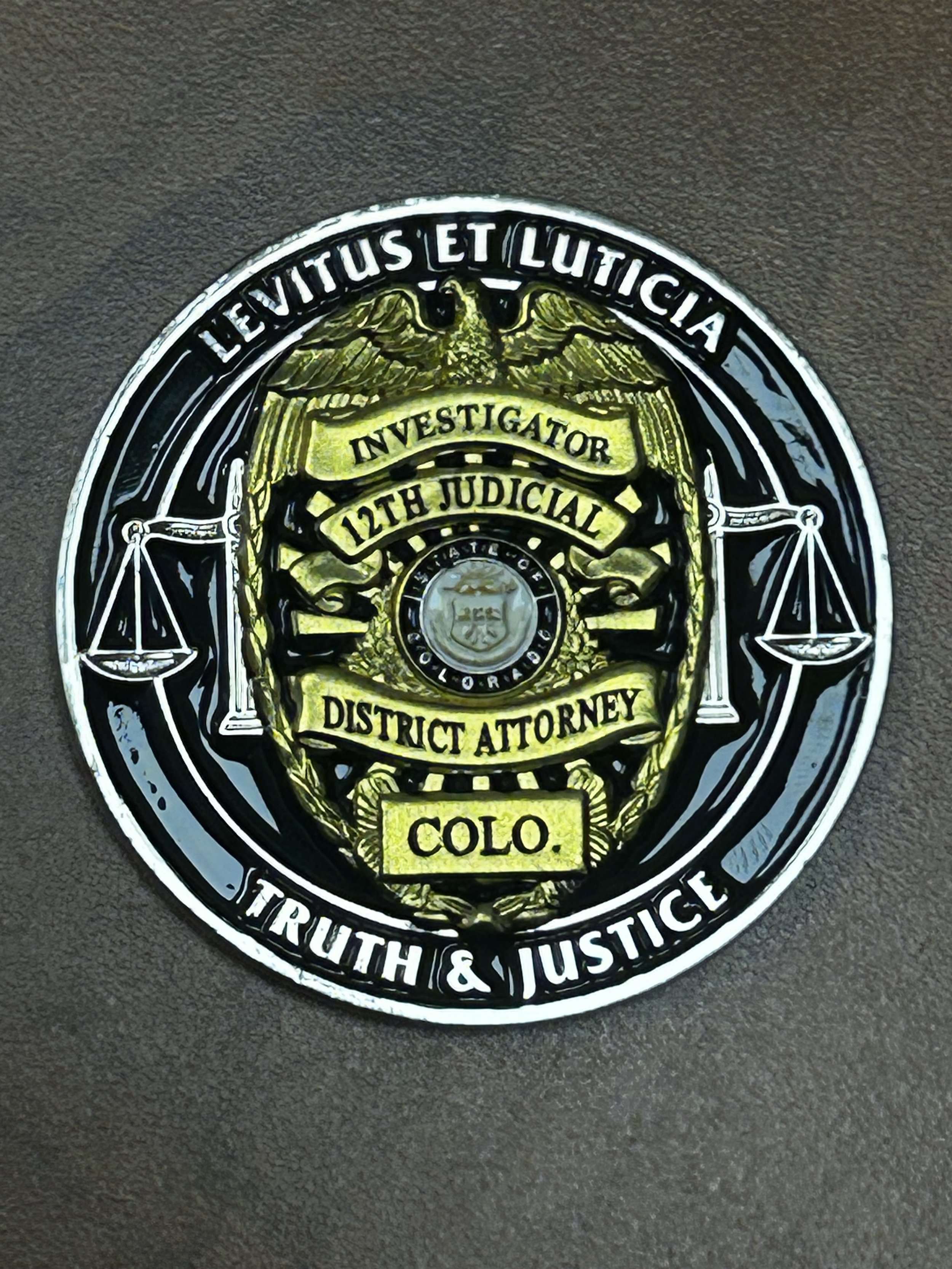
The Investigations Unit of the 12th Judicial District Attorney’s Office provides investigative and training assistance to the prosecuting attorneys and law enforcement agencies of the San Luis Valley.
The unit is staffed by state certified peace officers. All are involved in collateral duties such as: human trafficking, voter fraud investigation, sexual assault investigation, domestic violence response, white collar crimes and assisting law enforcement agencies with major crime investigations.
Decision Letters
When an officer-involved shooting occurs, the District Attorney is responsible for determining whether criminal charges should be filed; whether criminal charges should not be filed or whether to present the case to the Grand Jury for an indictment decision. The District Attorney goes beyond the requirements of state law and is involved in investigating use of force incidents in which law enforcement officers used deadly, or potentially deadly, physical force against a person in the course of their law enforcement duties. If the District Attorney decides not to file criminal charges, the District Attorney releases a decision letter of the findings.
Grand Jury Investigations
The District Attorney may refer any case to the grand jury.
If an officer-involved shooting cases is referred to the Grand Jury, under current law, the DA releases a statement disclosing that the matter is being referred to the Grand Jury and discloses the general purpose of the Grand Jury’s investigation. After a thorough and confidential investigation, the Grand Jury can either:
issue a “True Bill” reporting probable cause exists for an indictment;
issue a “No True Bill” reporting no probable cause exists for an indictment and a public report detailing the findings of their investigation.
Grand Jury proceedings are confidential, meaning that the public is prohibited from entering the proceedings; there is no release of witness testimony and/or names; and evidence collected and/or presented remains confidential even after the proceedings are concluded. This secrecy remains in place until an indictment is returned or a public report is issued and is made public pursuant to law.